Tournament guide
How to run a pen fight tournament
One desk, one written rule sheet and a bracket everybody can follow.
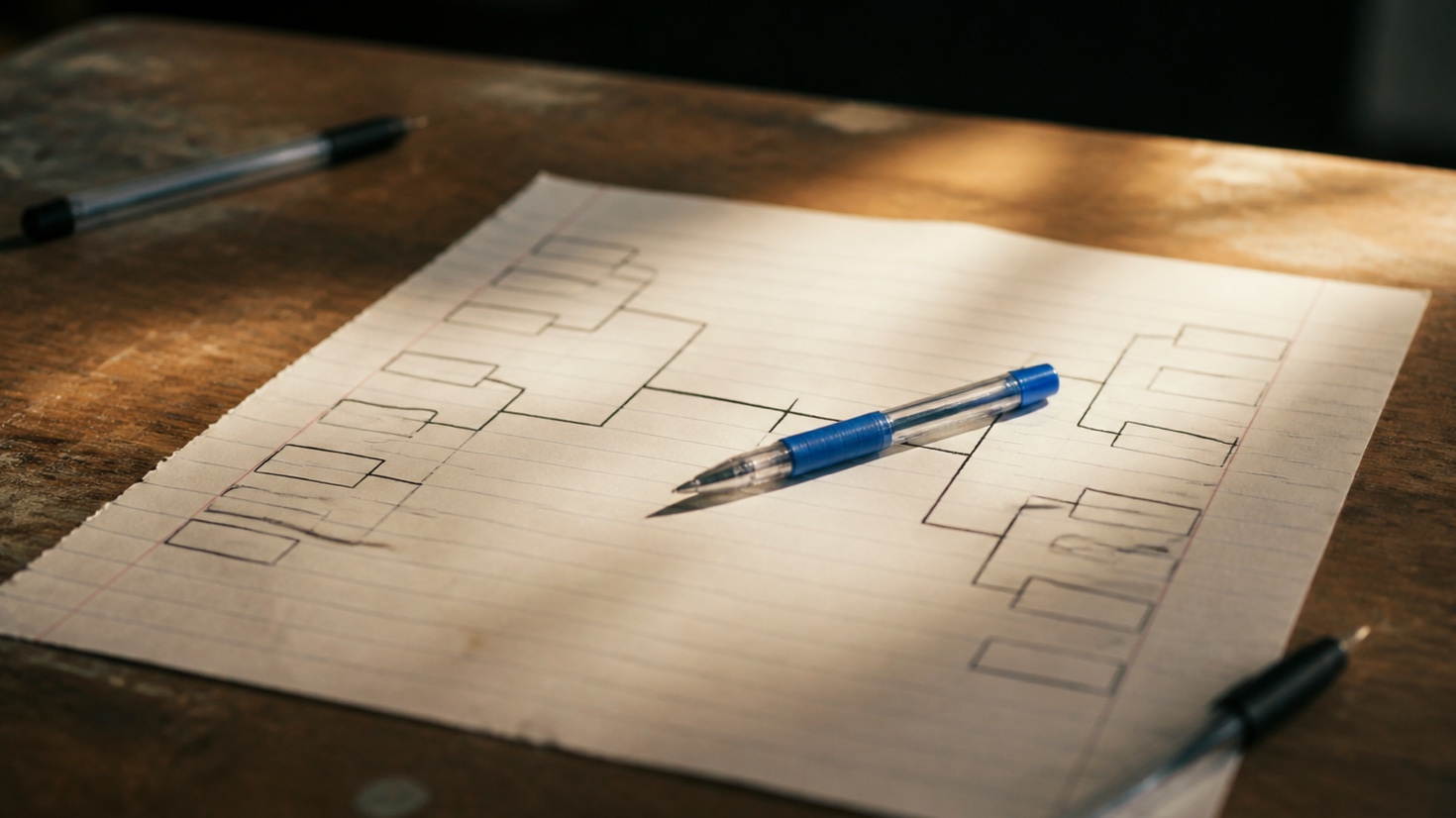
For a simple pen fight tournament, use 4, 8 or 16 players in a single-elimination bracket. Play best-of-three rounds until the final, then first to three. Alternate who shoots first, use stock pens, keep every match on the same desk, and write the edge and double-out rules where everybody can see them.
Choose the size
Four players need two semifinals and one final. Eight players need four quarterfinals, two semifinals and a final. Sixteen players need fifteen matches, so use more than one desk only if the surfaces are close enough to behave alike.
If the number is not 4, 8 or 16, give byes by random draw. Do not quietly hand them to the strongest players. A bye moves someone to the next round without a match.
Use one short rules sheet
Long rulebooks create more arguments than they prevent. Put these decisions at the top of the bracket:
- Players flick only their own pen, once per turn.
- A pen is out when it falls, or when its centre crosses the edge if the desk has a lip.
- A self-out loses the round.
- A double-out is replayed.
- A miss ends the turn but does not lose the round.
- Only stock pens are allowed. No added weight or sharp parts.
- The first shot alternates between rounds.
This is a recommended tournament format, not a claim that every classroom used it. If your group prefers another edge rule, change it before the draw and use it for every match.
Make the pens fair
The cleanest option is a tournament set: two similar stock pens that every player uses. Swap sides after each round so neither player keeps the same pen for the whole match.
If people want to bring their own pens, create simple classes. Put light ballpoints together, heavier gel or metal pens together, and triangular barrels in a separate class if they dominate the local desk. You do not need a weighing scale for a casual event. The organiser can reject an obviously modified barrel and place close pens together.
Do not play for ownership unless every participant is an adult and has clearly agreed. A tournament works perfectly well with points, a paper certificate or nothing more than a name on the bracket.
Set up the desk
Clear the playing surface and make sure nobody is standing where a pen may fall. Mark two starting areas with small pieces of paper tape or removable notes. Both pens should begin the same distance from the nearest edges.
Use the same desk orientation throughout. Turning the desk around can reveal a smoother patch, a lip or a slope that changes the shots. Wipe loose dust away before the first match, then leave the surface alone.
An eight-player bracket
Quarterfinals
1 vs 2
3 vs 4
5 vs 6
7 vs 8
Semifinals
Winner A vs Winner B
Winner C vs Winner D
Final
Semifinal winners
First to three rounds
Draw names from folded chits or use a random list. Record the score beside each name as soon as the match ends. Do not rely on the next person remembering it.
Run each match the same way
- Call both players and check their pens.
- Show them the starting areas and edge rule.
- Use a coin toss for the first shot in round one.
- Alternate the first shot after every round.
- Record the final round score and move the winner forward.
- Reset the pens and call the next pair.
One referee is enough. Their job is to watch the edge, stop double touches and record the score. The referee should not coach either player during the match.
How long it takes
A time estimate depends on the desk and the players, so test one match before announcing a schedule. If rounds drag, add a turn limit. After ten total turns, the pen closer to the middle wins the round. Mark the desk centre before the tournament if you use that rule.
Another option is the contact rule: after each player's opening move, a shot that does not touch the other pen loses the round. This forces action, but it is harsher on beginners. Use one limit or the other, not both.
Three-player and team formats
For three players on one desk, keep a fixed turn order and play last pen standing. A player who is knocked out leaves the round. Rotate who shoots first in the next round. Award one point for a round win and play to three points.
For teams, run ordinary one-on-one matches and add the wins. Avoid putting many pens on a small desk unless the crowded opening is the whole point of the event.
Settle disputes before the next flick
If players disagree about whether a pen crossed the edge, stop the round. The referee makes the call or orders a replay. Once the next player has flicked, the previous position is gone and should not be argued backwards.
If a pen breaks or leaks, stop using it. Replace both tournament pens if one changes, or allow the opponent to switch to a comparable pen. Safety matters more than preserving a one-point lead.
This is a practical house format, not an official national rulebook. It keeps the ordinary school rules while removing weighted modifications and purchased advantages. If your group changes a call, write it down before the draw and apply it to every match.
If the group is in different places, open private browser desks and use the same bracket.
Play Pen Fight