School memories
10 Indian classroom games we played
A notebook, a pen, four folded chits and the minutes before the next teacher arrived.
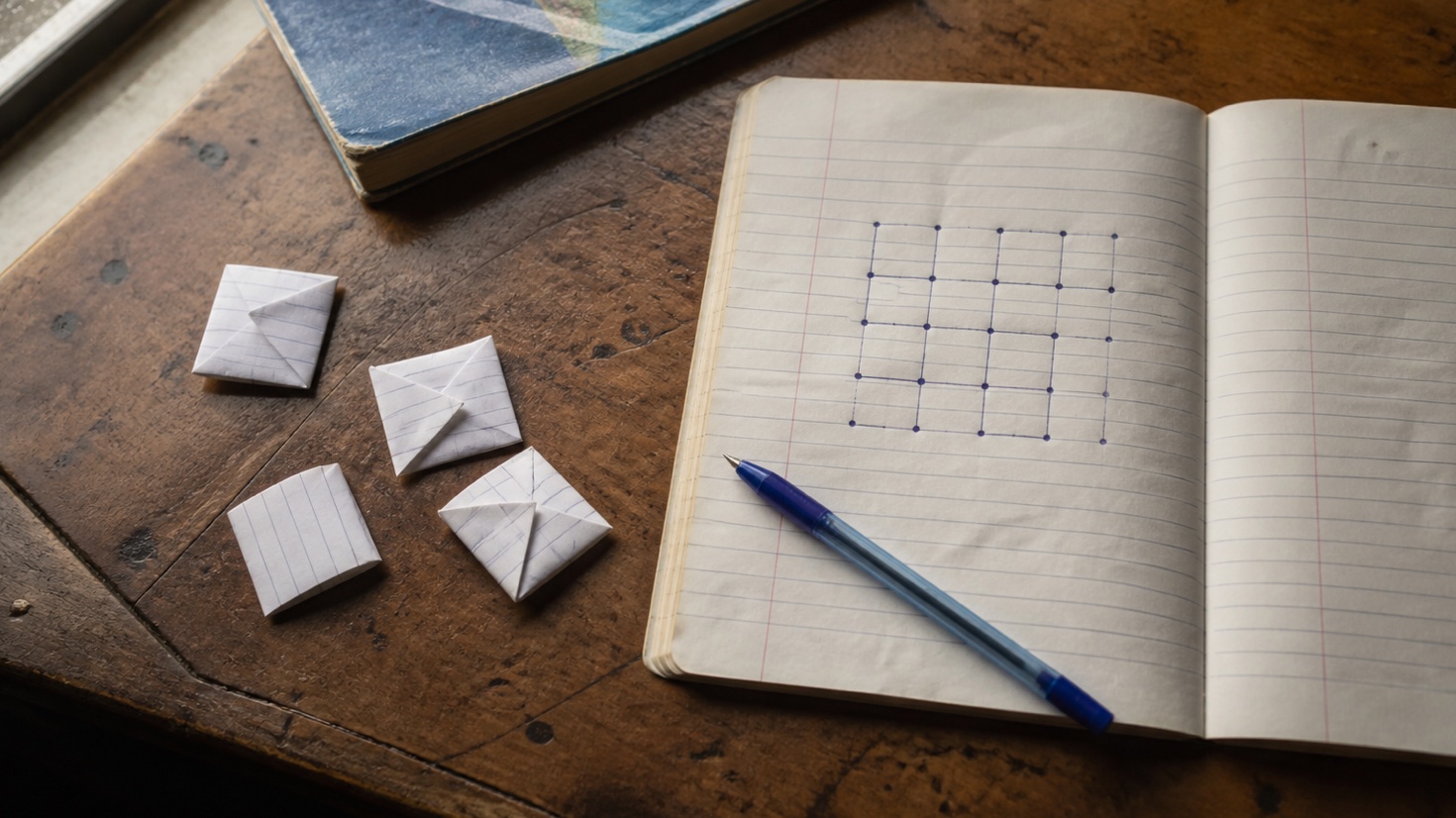
The Indian classroom games most often remembered from the 1990s and 2000s include pen fight, book cricket, Name Place Animal Thing, FLAMES, Raja Mantri Chor Sipahi, hand cricket, dots and boxes, SOS, bingo and eraser games. Most used the stationery already on the desk and rules passed from one student to another.
These were not organised school activities. They filled a free period, the minutes after finishing classwork, lunch on a rainy day, or any gap when going outside was not possible. Different schools used different names and scoring, but the materials repeat: notebook paper, the last page of a textbook, pens, erasers and small folded chits.
1. Pen fight
Two pens lay on the desk. Players took turns flicking their own pen into the other one. Knock the other pen off while keeping yours on the wood and the round was yours. Some groups played best of three. Some required the pen to fall, while others counted an overhang.
The game could be quiet until a pen hit the floor. Weight, grip and barrel shape became serious subjects for a few minutes. The full pen fight rules still need only two pens and a flat surface.
2. Book cricket
A player opened a book at random and used the last digit of the page number as the score. Six was six runs. Zero commonly meant a wicket, though some groups gave special meanings to eight or other numbers. Players wrote totals and wickets in a notebook, then changed innings.
It worked because a thick textbook could produce a long run of uncertain scores without dice or cards. The rules changed easily, so a class could add overs, named batters or a full tournament.
3. Name Place Animal Thing
Each player drew four columns headed Name, Place, Animal and Thing. Someone selected a letter. Everybody raced to fill all four columns with words beginning with it. Unique valid answers usually earned more points than answers another player had also written.
Classes added their own columns: film, food, brand, famous person or whatever the group could judge without starting a second game about spelling.
4. FLAMES
Two names were written down. Matching letters were removed and the remaining count was used to step through the letters in FLAMES. The letters were commonly read as Friends, Love, Affection, Marriage, Enemies and Siblings, though wording varied.
It was less a competitive game than a repeatable rumour machine. One result was rarely enough when another pair of names could be tested immediately.
5. Raja Mantri Chor Sipahi
Four folded chits carried four roles: Raja, Mantri, Chor and Sipahi. Players picked one secretly. The Raja revealed themselves and asked for the thief to be identified, with points assigned according to the role and whether the guess was correct.
Some groups swapped the order of Mantri and Sipahi in the guessing part or changed the points. The folded paper and hidden identity mattered more than a universal scoring table.
6. Hand cricket
Two players showed a number of fingers at the same time. One batted and added their number to the score. If both players showed the same number, the batter was out. Then they swapped roles and chased the total.
Odd-even was often used to decide who batted first. A group could play a single wicket in a minute or keep score for teams across a longer break.
7. Dots and boxes
Players drew a grid of dots. Each turn added one horizontal or vertical line between neighbouring dots. Completing the fourth side of a box earned that box and usually another turn. Initials inside the completed squares kept the score visible.
The early turns looked harmless because few boxes closed. The end of the grid could produce a long chain for the player who forced the right final opening.
8. SOS
A square grid was drawn on paper. Players wrote either S or O in an empty cell, trying to make the sequence SOS horizontally, vertically or diagonally. Completing one scored a point and often gave another move.
Unlike tic-tac-toe, the same letter could belong to more than one sequence. A crowded grid stayed playable until the final cell.
9. Classroom bingo
Players wrote a set of numbers in a grid. They took turns calling numbers and crossing them out. Completing the agreed number of rows, columns or lines finished the game. Many groups crossed out the letters in BINGO one by one as lines were completed.
Because everybody made their own grid, the same called number could help several players at once. The game needed more space and time than pen fight, but no shared board.
10. Eraser flip and eraser battles
In one version, a player pressed an eraser's edge to make it flip and scored for a clean landing. In another, erasers moved across the desk and tried to knock or cover each other. Local names and win conditions changed widely.
The eraser worked for the same reason as a pen: it was already in the pencil box, it moved differently on every desk, and a rule could be shown in one turn.
Why the lists never match exactly
A school in Hyderabad, Mumbai, Kolkata or a smaller town did not receive the same printed collection of games. Students carried them between classes, families and schools. Regional language, furniture and whatever happened to be in the bag changed the list.
Public recollections commonly group pen fight with book cricket, Name Place Animal Thing and paper games. Other memories add thumb fights, paper football, red hands, Chinese whispers, tipy tipy top or games known only inside one class. A list of ten is a starting shelf, not a national syllabus.
The selection was checked against a recent Indian Express classroom-games feature, older Indian school nostalgia coverage, and first-person discussion threads. Rules are described as common versions because local variants were normal.
One of these desk games has been rebuilt for the browser.
Play Pen Fight